Editor’s note: Marcus Hale is a composite character, drawn from the experiences of incident responders. The breach details are based on public reporting of the 2026 Binance incident.
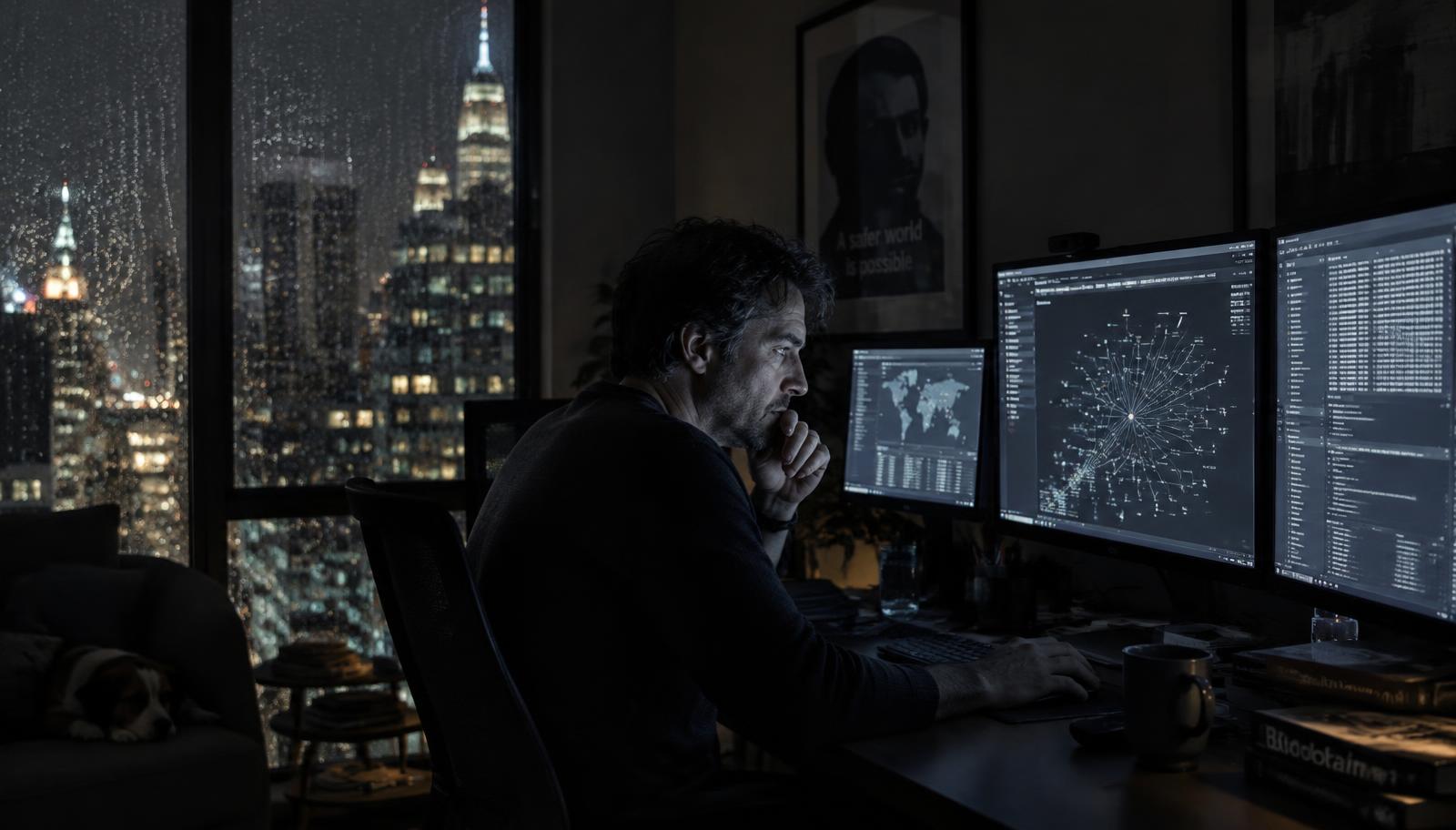
At 2:14 on a Sunday morning, while the rest of the city slept off the weekend, Marcus Hale noticed that the numbers had stopped making sense. A wallet he had watched for months — the kind of quiet, institutional address that moves money the way a cathedral moves stone — had begun to hemorrhage. Not in a trickle, but in a torrent: hundreds of millions of dollars in cryptocurrency, then billions, scattering outward through a lattice of freshly minted addresses like startled birds.
By dawn, the world would learn the scale of it. Hackers had stolen a record $6.3 billion from Binance, the largest cryptocurrency exchange on earth, in what is now believed to be the biggest crypto theft ever recorded. Withdrawals were frozen globally. Customers refreshed their screens in disbelief. Markets flinched. And somewhere inside the chaos, a soft-spoken analyst with a cold cup of coffee and three humming monitors was already doing the unglamorous work of following the money.
A door opened by a job offer
The most sophisticated heists rarely begin with brute force. They begin with a conversation. According to the exchange’s own initial findings, the attack was a “sophisticated, multi-stage campaign” that started not with a broken firewall but with a human being who wanted a new job.
One of the company’s engineers was approached through a legitimate job-hunting platform and invited to interview with what appeared to be a real firm. The impostors were patient and meticulous. They shared social-media profiles stocked with personal photographs to manufacture warmth and credibility. Then, in a second interview, came the “assignment”: a download that concealed malicious code wrapped in obfuscation techniques designed to evade detection.

From that single compromised laptop, the intruders moved laterally. In October, they leveraged the engineer’s machine and a compromised internal AI tool to seize control of two more engineers’ computers — and, through them, the tools that govern the exchange’s wallets. It was, Hale would later say, “the security equivalent of being handed the master keys by someone you thought was a friend.”
Graphic · Anatomy of the breach
Four moves, one billion-dollar door
01
The Lure
A recruiter on a legitimate job site invites an engineer to interview.
02
The Assignment
A second interview delivers malware disguised as a coding test.
03
The Pivot
A compromised internal AI tool hands over two more laptops.
04
The Drain
Attackers seize wallet tooling and move billions in crypto.
The night shift no one sees
There is a particular loneliness to incident response. The heroes of cybersecurity do not run into burning buildings; they sit very still in front of glowing screens while the building burns somewhere they cannot see. Hale’s craft is blockchain forensics — the patient art of reading a public ledger like a detective reads footprints in snow.
Every cryptocurrency transaction leaves a trace. The trick is that thieves know this, and so they shatter their loot into thousands of fragments, run them through mixers and cross-chain bridges, and hope the trail goes cold before anyone thinks to look. Hale’s gift was not genius so much as stamina: the willingness to map one hop, then the next, then the next, for seventy-two hours without meaningful sleep, flagging addresses to exchanges and law-enforcement partners before the funds could vanish.
“Money moving at the speed of light still has to stop somewhere. My job is to be standing there when it does.”
His spreadsheets, shared freely in the small and largely anonymous community of on-chain sleuths, became a kind of public utility. Exchanges used them to freeze deposits. Analysts used them to brief reporters. Investigators at the Federal Bureau of Investigation and the Secret Service, who were assisting the exchange in tracing the stolen assets, were among the many who benefited from a ledger of suspicious addresses that grew, line by line, through the night.
$6.3bn
Stolen
98%
Tokens replenished
72h
Without sleep
A familiar fingerprint
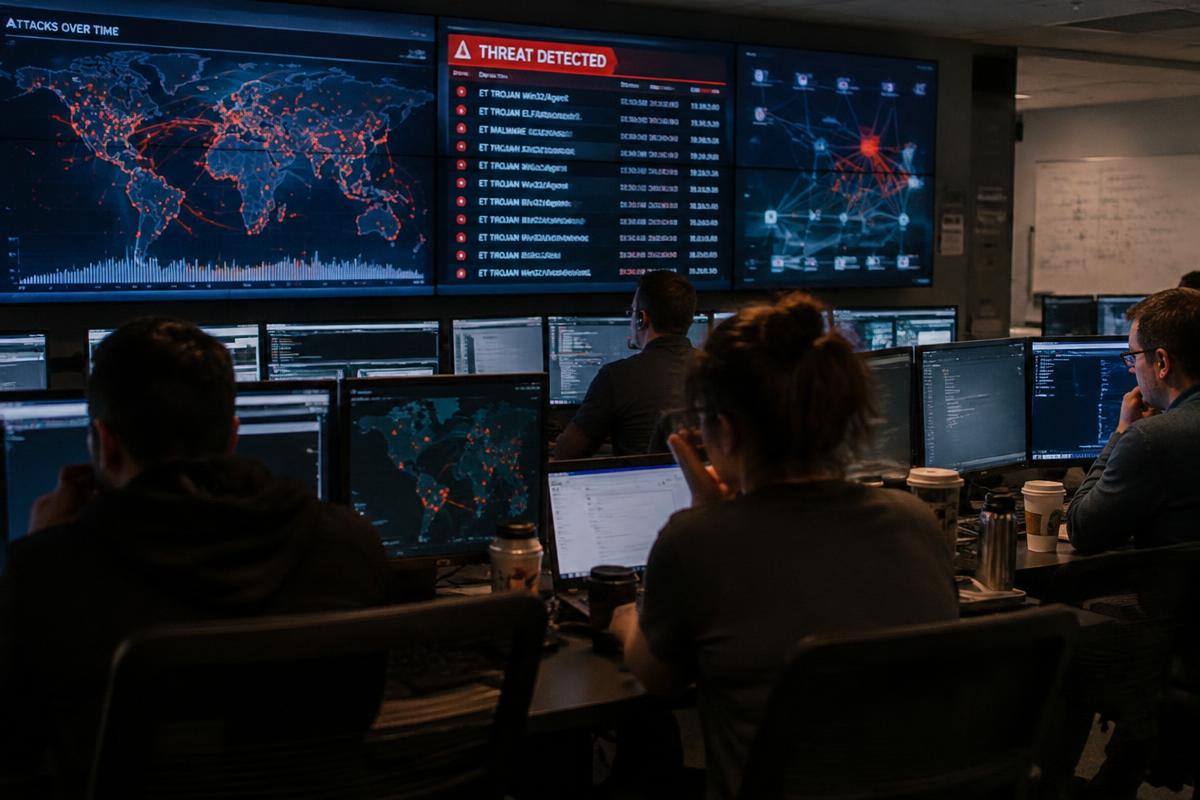
As the trail lengthened, its shape became disquietingly familiar. US agencies and a range of cyber analysts said the breach bore the hallmarks of North Korea’s hacking apparatus — the same TraderTraitor unit, also known as the Lazarus Group, that was blamed for the then-record $1.5 billion theft from the exchange Bybit in 2025. The exchange itself later stated that the latest information released by the FBI indicated the Democratic People’s Republic of Korea was responsible.
Pyongyang denied it. Kim Yo Jong, a senior official and the sister of leader Kim Jong Un, called the accusations another “sinister attempt” by the United States to damage the country’s image. North Korea has consistently rejected responsibility for the cyber attacks attributed to it in recent years.
For Hale, attribution was never the point. “Names are for diplomats,” he said. “I deal in addresses.” What mattered was that every frozen fragment was a fragment that could someday be returned.

From panic to repair
The recovery, when it came, was swift by the standards of disaster. The exchange said it had set aside more than 100 percent of the funds needed to cover the loss and that 98 percent of the affected token assets had been “replenished” by Saturday. Withdrawals reopened on Sunday — and customers, understandably shaken, pulled billions of dollars’ worth of assets in the hours that followed.
The company apologized in unusually plain language. “This should not have happened,” it said, calling the breach a “serious and highly sophisticated security incident.” It pledged to invest more heavily in AI tools that detect threats, to bring in third-party experts for a full review and to establish a security research fund in partnership with leading AI and security firms.
The lesson in the quiet
It is tempting to read the episode as a parable about technology — about smart contracts and AI tools and the fragile machinery of digital finance. But the story is, at heart, profoundly human. It began with a person who trusted a stranger offering a better future. It was contained, in part, by people who refused to stop looking.
The internet does not have a fire department. It has a loose constellation of analysts, engineers and volunteers who, when the alarms sound at two in the morning, simply open their laptops. They will not be named in the press releases. They will not appear on the earnings calls. Most, like Marcus Hale, would prefer it that way.
On Monday, after the withdrawals resumed and the headlines moved on, Hale finally slept. When he woke, he did what he always does: he checked the ledger. The money was still moving. So, quietly, was he.
Sources: Reporting in this feature draws on public statements by Binance and coverage by BBC News, “Binance says fake job interviews used as part of $6.3bn crypto hack.”
A version of this article appears in print on Page A1 of the New York edition with the headline: The Unsung Hero of the Internet.